

Key Takeaways
- The Zone Diet was designed to control metabolism—not just promote weight loss.
- Strict macronutrient balance is central to metabolic control.
- Modern diet trends often prioritize simplicity over science.
Yes—the Zone Diet may still be ahead of its time.
Unlike most diet trends that focus on eliminating a single nutrient, the Zone Diet was designed to control hormonal and metabolic pathways through precise macronutrient balance.
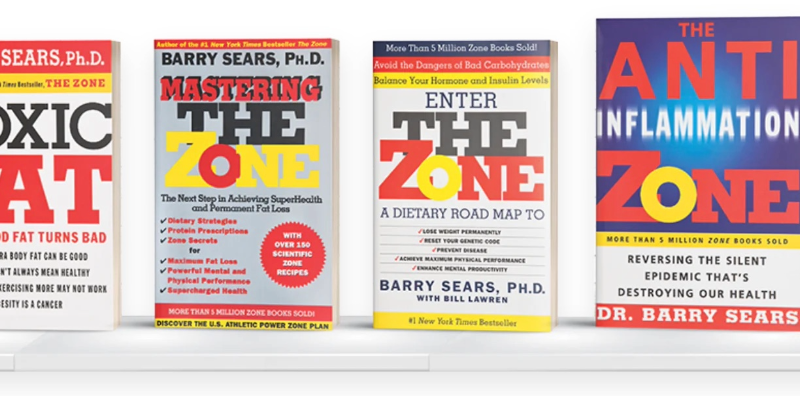
Before I introduced the Zone diet in 1995, dietary advice was essentially like a Miller Lite commercial. On one side, you had those screaming that fat makes you fat (i.e., Dean Ornish), and the other side was yelling that carbs make you fat (i.e., Robert Atkins). I was coming from my cancer drug delivery background, so I looked at diet as a drug, not a philosophical choice.
The goal of the Zone diet was not weight loss, but improving hormonal and metabolic control. That was a complex concept 30 years ago. Unfortunately, the diet wars today are now being waged by social media influencers who have little understanding of metabolic pathways. As a consequence, Americans are fatter than ever. So, let’s see what currently drives dietary advice and how the Zone diet stacks up.
1. The Zone Diet Has Rigid Rules.
That’s why the Zone diet works. Metabolic control doesn’t respond to simple guidelines from social influencers. Today’s audiences want simple instructions such as “intuitive eating,” “follow a Mediterranean diet,” or “eat more protein”. Your metabolism laughs at such simplistic thinking. The result is that obesity is at an all-time high in America.
That’s why you do clinical research instead of writing what you think people want to hear. A good clinical trial requires treating your subjects like lab rats. This means you have to supply all their food and don’t let them think. There are very few such trials in the literature. Those that exist indicate diet-induced hormonal changes are very sensitive to the macronutrient composition of a single meal (1), that the Zone diet is superior to a ketogenic diet containing equal amounts of calories and protein (2), the Zone diet is superior to the Mediterranean diet under metabolic ward conditions (3), and that theZone diet can put type 2 diabetes into remission within six months while reducing body fat and increasing lean body mass.(4).
2. Modern Eating Patterns—social dining, eating out, meal delivery—make strict macronutrient balancing less practical. People prefer guidelines that adapt easily to real-life eating.
If lifestyle compatibility is having a meal delivered by DoorDash, then the health future of America is bleak. My original work was directed at the medical community, not the general public. As a consequence, thinking in terms of percentages of calories may be too complex for most to understand. So, let me give you a simple visual way to balance your plate if you are eating out or having a DoorDash delivery.
One-third of your plate should consist of low-fat protein, one-half of your plate should consist of non-starchy vegetables, and the final one-sixth of your plate should consist of fruits. Finally, you add a dash of fat. If you don’t like vegetables, then replace those with bread or starches that only fill one-sixth of your plate. This means one-third of your plate is empty, but you have dramatically improved the hormonal and metabolic outcome for that meal (i.e., you won’t be hungry) for the next five hours. Then repeat with the next meal for the rest of your life if your goal is long-term weight loss and better metabolic control to treat chronic disease, so that you can live longer.
3. Who needs to think about balancing their plate if they are using GLP-1 drugs?
Unfortunately, more than half of the people taking GLP-1 drugs quit within a year. Why? The side-effects. And when you quit taking GLP-1 drugs, then you immediately begin to regain the lost weight and lose all their medical benefits. In fact, weight regain is twice as fast as in those who lost weight by diet or exercise (5).
If GLP-1 drugs (which are modified hormones) are the cutting edge of weight loss (assuming you continue to take them for the rest of your life), then using the Zone diet to influence a far greater number of diet-influenced hormones is still ahead of its time.
4. The Zone Diet is only part of Metabolic Engineering®.
If you really want to control your metabolism, the Zone diet is a good start. However, you still have to control inflammation, which accelerates aging and oxidative stress, which damages your genes. For that, you will need adequate intake of omega-3 fatty acids and polyphenols.
Combining those dietary interventions with the Zone diet enables you to maintain wellness for a far greater period of time. That is the purpose of medicine. This is why, when Hippocrates said, “Let food be your medicine and let medicine be your food,” he was really describing Metabolic Engineering®. Hippocrates was ahead of his time. The same can be said of the Zone diet, which remains ahead of its time as part of Metabolic Engineering®.
References
1. Ludwig DS, Majzoub JA, Al-Zahrani A, Dallal GE, Blanco I, Roberts SB. High glycemic index foods, overeating, and obesity. Pediatrics. 1999;103:E26. doi: 10.1542/peds.103.3.e26.
2. Johnston CS, Tjonn SL, Swan PD, White A, Hutchins H, Sears B. Ketogenic low-carbohydrate diets have no metabolic advantage over nonketogenic low-carbohydrate diets. Am J Clin Nutr. 2006; 83:1055-61. doi: 10.1093/ajcn/83.5.1055.
3. Tettamanzi F, Bagnardi V, Louca P, Nogal A, Monti GS, Mambrini SP, Lucchetti E, Maestrini S, Mazza S, Rodriguez-Mateos A, Scacchi M, Valdes AM, Invitti C, Menni C. A high protein diet is more effective in improving insulin resistance and glycemic variability compared to a Mediterranean diet: A cross-over controlled inpatient dietary study. Nutrients. 2021;13:4380. doi: 10.3390/nu13124380.
4. Stentz FB, Lawson D, Tucker S, Christman J, Sands C. Decreased cardiovascular risk factors and inflammation with remission of type 2 diabetes in adults with obesity using a high protein diet: Randomized control trial. Obes Pillars. 2022 ;4:100047. doi: 10.1016/j.obpill.2022.100047.
5. West S, Scragg J, Aveyard P, Oke JL, Willis L, Haffner SJP, Knight H, Wang D, Morrow S, Heath L, Jebb SA, Koutoukidis DA. Weight regain after cessation of medication for weight management: systematic review and meta-analysis. BMJ. 2026; 392:e085304. doi: 10.1136/bmj-2025-085304.

10 comments
Everyone, including RFKJ and his staff, should read the book. The information should be taught in CMEs and medical schools. Begin with bibliography. It is important.
I enjoy my time as a lab rat and have been for over 20 years. Read the fist book, thought it made sense, lost 40 lbs in 5 months and have been within 5 lbs. up or down ever since. Along the way I may be the longest standing monthly purchaser of fish oil as well. My demonstrated journey has generated many questions from family and friends along the way too. Most are intrigued and many have fallen away due to cultural norms and fads. The Zone way of eating has remained a staple in my life and will continue. Lets see how the next 20 years end up? Thanks Doc!
I stumbled upon Dr. Sear’s “Enter The Zone” book over 25 years ago. I was at Chapters Book Store staring at endless books. Completely overwhelmed with the news I had just received from my Dr….. and through my tears I saw these words “balance your hormones”… I didn’t even see the title! I have been a faithful follower ever since. Those first few months I couldn’t believe the changes in my body, my skin, my mood. I only wish I had found his first book sooner.
I’ve said it before, and I’ll say it again … Dr. Sears you saved my life… and gave me an exceptional quality of life after a very frightening illness.
Thank you from the bottom of my heart. It’s not often someone whom you’ve never met could have such an impact on the direction of another persons life…. But you sure did on mine!
I truly believe it was because of you and your book that I was able to be a mother to my two young children, and see them safely into adulthood.
I wish you and your family all the best💕
Thank you for your kind words, but you did all of the work. The underlying science behind the concept of the Zone has continued to evolve with new research on the inner working of metabolism. For the latest updates, I would recommend visiting http://www.DrSears.
Mi pregunta es sobre los bloques ya se que por hacer más fácil se agrupa los alimentos según el macronutriente dominante pero mi pregunta es yo uso la aplicación Cronomether en el que me da la información de todos los macros de los alimentos mi pregunta : las proteínas de las verduras o de las legumbres o cereales los puedo tener en cuenta a la hora de conseguir los 30 g. de proteína ? ya se que se absorbe un 10-15 % menos , pero si tendría en cuenta este cálculo sería optimo tener en cta. la totalidad de las proteínas de todos los alimentos. Gracias.
It’s not so much the absorption rate, but where the protein is absorbed in the small intestine. It is only in the distal part of the small intestine that certain cells known as L-cells are located. When protein interacts with these specialized cells, they release the hormone GLP-1, which travels directly to the brain via the vagus nerve to suppress hunger. Actually, your daily protein target should be approximately 90 grams (i.e., three meals each containing 30 grams) to provide satiety. You can calculate your exact protein needs using the Protein/Body Fat Calculator here: https://zoneliving.com/pages/zone-body-fat-calculator
Qué tan importante es tener la tensión sistolica sobre 140-160. La diastólica 8. Habiendome dado la analitica que usted recomienda, todo bien. Sigo la dieta de la zona. Hago ejercicio. Tengo 70 años. Gracias
Ideally, you would like your blood pressure to be less than 130/80 at age 70. Adding extra omega-3 fatty acids will make it easier to reach that range.
Sigo la dieta zona de 5 bloques pero a la hora de ejercitar con pesas en musculación noto que me falta energía en los músculos por eso pase de 135 hc. aumente 2 bloques más en las comidas y ahora si noto que mis entrenos han mejorado pero me preocupa porque se ha roto la proporción de los bloques y ahora mi consumo de proteína la mantengo las correspondiente a 5 bloques o sea 105 g de proteína y mis hc rondan los 170 g. dejo de estar en la zona ?
Being in the Zone is ultimately determined by blood markers, particularly the absence of insulin resistance and decreased low-level chronic inflammation. Both are a consequence of better metabolic control. If you are weight training, I would suggest determining your protein requirement using the Body Fat/Protein Calculator here: https://zoneliving.com/pages/zone-body-fat-calculator
I suspect that your protein intake may be too low.