
Key Takeaways
- Diets are often defined by philosophy instead of science. A clearer way to define a diet is by its macronutrient composition, calorie intake, and ultimate metabolic goal.
- Macronutrient composition determines how a diet is classified. A diet can be described as high, moderate, or low in protein, carbohydrates, or fat, depending on its percentage of total calories.
- Total calorie intake is more important than diet philosophy. Excess calories—whether from fat or carbohydrates—are stored as body fat if energy intake exceeds energy expenditure.
- The Zone Diet is designed to optimize metabolic balance. By balancing protein, carbohydrates, and fat while controlling calorie intake, the Zone Diet helps regulate hunger and maintain metabolic efficiency.
Diet definitions are confusing because most diets are defined by philosophy rather than science.
A clearer way to define a diet is by three measurable factors: its macronutrient composition, its calorie intake, and its ultimate metabolic goal.
1. Defining a diet by macronutrient composition
There are only three macronutrients in any diet: protein, carbohydrates, and fat. So here’s my simple rule: you can define a diet by whichever macronutrient makes up the largest percentage in a particular diet. Now let’s put some structure around that.
If any particular macronutrient makes up more than 50% of the total caloric content of a diet, it would be classified as high.
If it falls between 30% and 50%, it’s moderate.
If its below 30%, it’s low.
And if it’s under 10% it’s very low.
Here are some examples:
Classic ketogenic diet: a high-fat, very-low protein, very low carbohydrate diet.
Modified ketogenic diet: a high-fat, moderate-protein, very low-carbohydrate diet.
Thus, to call either type of ketogenic diet a high-protein diet makes no logical sense. All ketogenic diets are high-fat diets.
Low-fat diet: a high-carbohydrate, low-protein, and low-fat diet
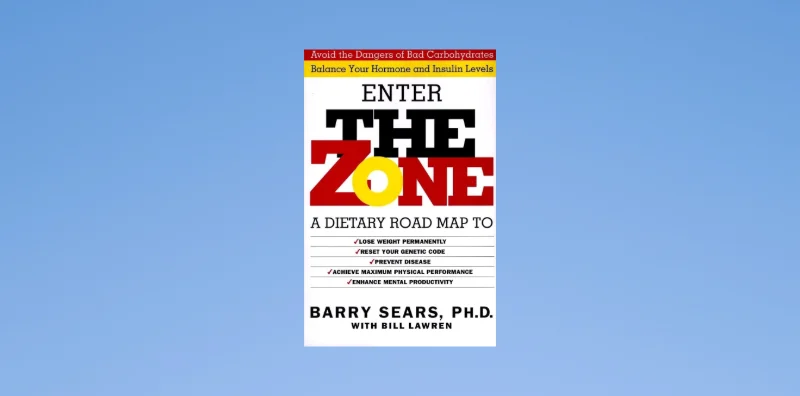
Zone diet: a moderate-carbohydrate, moderate-protein, and moderate-fat diet.
2. Defining a diet by how many calories you are actually consuming
The composition of any diet is less important than the actual amounts of calories you are consuming when following that diet. Furthermore, the total calorie intake should be based on your lean body mass and physical activity level, not your weight. If your goal is to live longer, having about 15 percent body fat for males and 22 percent body fat for females is a good target. Very few in America meet those guidelines.
Furthermore, you can readily store excess fat or carbohydrate for a rainy day, but you can’t store excess protein. Thus, another key to an optimal diet is determining how much protein you need each day to maintain your lean body mass and then building the rest of your diet around that amount.
I consider the minimum protein intake for an adult to be about 90 grams, evenly spread throughout the day. If you are more physically active, then you might require slightly increased amounts. This level of daily protein intake will maintain your lean body mass, but more importantly, it will reduce your hunger.
It is the protein intake at each meal that stimulates the release of GLP-1 from your gut, which then travels directly to the brain, telling it to stop eating. You need about 30 grams of protein at every meal to achieve that goal, as the hormonal effect of that level of protein intake on appetite suppression will only last about five hours. If that is too hard, then you can consider taking weekly injections of GLP-1 drugs for the rest of your life to control hunger. Just kidding.
Now, a little math. It is suggested that the average female should consume 2000 calories per day, and the average male about 2400 calories per day. Since 90 grams of protein per day represents 360 calories, a recommended low-fat diet (about 15 percent%) to obtain adequate protein would require 2400 calories per day—fine for an average male, but far too many calories for an average female. If you consume more calories than you burn, they will be stored as body fat.
As I mentioned above, there are two types of ketogenic diets. One is the classic ketogenic diet, used to treat epilepsy, which contains only 10 percent protein, and the other is called the modified ketogenic diet, which contains about 30 percent protein. Getting 90 grams of protein daily using the classic ketogenic diet is incredibly hard. However, it is easier to use a modified ketogenic diet.
The problem is the high fat content (usually 60 percent of total calorie intake) of the modified ketogenic diet, which contributes at least another 1600 calories before you even add in carbohydrate intake.
The Zone diet is radically different. You still need to get 90 grams of protein per day, but the calorie contributions of the fat (30 percent) and carbohydrate (40 percent) are lower. Thus, for the average female, they are consuming about 1200 calories per day, and the average male about 1500 calories per day, without hunger because they are consuming adequate protein spaced evenly throughout the day to suppress hunger.
It should be noted that these calorie intakes are similar to those using GLP-1 drugs. As with GLP-1 drugs, when fewer calories are coming in, AMPK is activated, leading to increased burning of stored fat to supply the additional energy needed for your metabolism. But with the Zone diet, this also occurs without loss of lean body mass.
3. Defining a diet by its ultimate goal
Most people think of a diet in terms of losing weight. In reality, they should be more concerned about losing excess stored body fat, which is pro-inflammatory and a major contributor to the early onset of chronic disease.
The goal of the Zone diet goes far deeper into metabolic control theory. Its goal is to activate the master metabolic switch (AMPK) through calorie restriction, without causing hunger. Yet at the same time, the Zone diet supplies adequate protein to stop hunger by increasing GLP-1 release from the gut and activating gene transcription (mTOR) necessary to rebuild damaged tissue. It is the continuous dynamic balance between AMPK and mTOR that allows your metabolism to work at peak efficiency.
So, instead of having a philosophical debate about whether it is excess carbs or excess fat that makes you fat, you should reframe the discussion as what is the best type of diet that will provide optimal control over the expression of your genes to live longer and better. That starts with the correct definitions of the type of diet you are promoting to reach that ultimate goal.