
How Chronic Stress Causes Inflammation: The Role of AMPK

Key Takeaways

  • Chronic stress drives inflammation: Long-term stress raises cortisol levels, which eventually promotes chronic low-grade inflammation throughout the body.
  • Cortisol suppresses AMPK activity: Persistently elevated cortisol inhibits AMPK, the master regulator of metabolism, leading to increased inflammation and accelerated aging.
  • Activating AMPK reduces the impact of stress: Improving AMPK activity helps restore metabolic balance and lowers inflammation caused by chronic stress.
  • Metabolic Engineering® is the most powerful intervention: The combination of the Zone Diet, omega-3 fatty acids, and polyphenols helps activate AMPK and reduce stress-related inflammation.
  • Lifestyle factors still play a role: Exercise and stress-reduction practices such as yoga can help, but they are less powerful than diet in activating AMPK.
  • The 70-25-5 rule for managing stress: About 70% of stress reduction comes from diet (Metabolic Engineering®), 25% from exercise, and 5% from relaxation techniques.

Over 75% of Americans report symptoms of stress. So, what exactly is stress biochemically, and more importantly, how can you reduce it?  

Stress is the body’s natural response to demands or challenges, whether from everyday pressures or significant life events.  The body’s response to short-term stress is productive as the hormone co. However, if the stress is ongoing, this normally protective mechanism can become destructive, leading to acceleration of chronic disease and aging. 

The primary consequence of chronic long-term stress is increased inflammation.  This is paradoxical, since the primary stress hormone, cortisol, decreases inflammation in the short term.  However, chronically elevated cortisol levels inhibit the master metabolic switch, AMPK (1, 2, 3).  AMPK is inhibited by excess cortisol, leading to chronic low-level inflammation in every organ of the body (including the brain) and accelerating aging (4).

The most powerful way to address chronic stress is to increase AMPK activity.  The best way to do that is to follow Metabolic Engineering®, which reprograms your metabolism in every cell.  The most important dietary component of Metabolic Engineering® is the Zone diet, which restricts calorie intake without causing hunger or fatigue. 

One metabolic consequence of the Zone diet is a rapid reduction in insulin resistance, which in turn decreases inflammation.  The second most important dietary component of Metabolic Engineering® is adequate intake of omega-3 fatty acids, which provide substrates for the production of powerful hormones known as resolvins that shut off lipid-based hormonal mediators of inflammation. 

For this to be effective, you will need approximately 2 grams of EPA and DHA daily.  These two dietary components of Metabolic Engineering® will account for 90 percent of your ability to reduce chronic inflammation induced by stress.  Finally, you can add polyphenols to Metabolic Engineering® to reduce oxidative stress, which in turn reduces inflammation.

But what about lifestyle factors to reduce stress?  They are helpful, but not as powerful as Metabolic Engineering® in activating AMPK, which reduces the inflammatory consequences of chronic stress.  This is why I use the 70-25-5 rule.  Seventy percent of your ability to reduce excess cortisol will come from following Metabolic Engineering®, twenty-five percent from exercise, and five percent from stress reduction techniques like yoga.  Intensive exercise increases AMPK activity only during exercise, and yoga has a lower impact on activating AMPK than does intensive exercise, though it is slightly better than simply walking (5).

Chronic stress is a constant companion of modern life, but you have several lifestyle interventions that can help prevent chronic stress from adversely affecting your health.  Metabolic Engineering® is by far the most important.  The more you combine these other lifestyle interventions with Metabolic Engineering®, the less stressful your life will become.

References

1.  Christ-Crain M, et al. AMP-activated protein kinase mediates glucocorticoid-induced metabolic changes: a novel mechanism in Cushing’s syndrome. FASEB J. 2008; 22:1672-1683. doi: 10.1096/fj.07-094144. 

2Liu YZ et al. Inflammation: The common pathway of stress-related diseases. Front Hum Neurosci. 2017;11:316. doi: 10.3389/fnhum.2017.00316. 

3Zhou B et al. Serum- and glucocorticoid-induced kinase drives hepatic insulin resistance by directly inhibiting AMP-activated protein kinase. Cell Rep. 2021 Oct 5;37(1):109785. doi: 10.1016/j.celrep.2021.109785. 

4.  Yegorov YE, Poznyak AV, Nikiforov NG, Sobenin IA, Orekhov AN.  The link between chronic stress and accelerated aging. Biomedicines. 2020; 8:198. doi:10.3390/biomedicines8070198. 

5. Dhali B, Chatterjee S, Sundar Das S, Cruz MD. Effect of yoga and walking on glycemic control for the management of type 2 diabetes:  A systematic review and meta-analysis. J ASEAN Fed Endocr Soc. 2023; 38:113-122. doi: 10.15605/jafes.038.02.20. 

Key Takeaways:

  • Allulose may naturally stimulate GLP-1 release, helping regulate appetite and fat metabolism without the need for injectable drugs. 
  • Early research suggests greater fat loss and less rebound weight gain compared to semaglutide in animal studies. 
  • Unlike traditional sugar, allulose is minimally absorbed and not counted as sugar, making it easier to incorporate into daily nutrition. 
  • Long-term success depends on body composition—not just weight, with diet (like the Zone Diet) helping preserve lean mass while reducing body fat.  

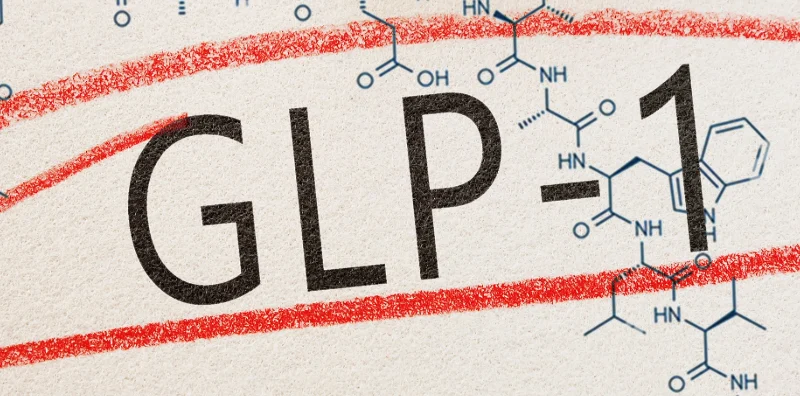
What if there were a simple sugar that was more powerful than GLP-1 drugs in terms of fat loss?  What if that simple sugar were already approved as a food additive so it could be added to food products like shakes, bars, oatmeal, and granola, making it realistic to take it for a lifetime? 

And of course, what if that simple sugar were less expensive than any GLP-1 drug?  If so, it could be a radical change in obesity treatment.  

The first injectable GLP-1 drug (semaglutide) was introduced in 2017 for treating diabetes under the tradename Ozempic.  The oral version of semaglutide for treating diabetes, under the trademark Rybelsus, was introduced in 2019, but you had to take it daily rather than a weekly injection.  Not surprisingly, patient compliance was less than with a weekly injection. 

Once injectable semaglutide was approved for weight loss in 2021 (under the trademark of Wegovy), TV advertising took off, and the world never looked back.  A slightly altered form of Wegovy for oral use was approved in December 2025, but it has similar side effects to the injectable form[‘;;;.  

Unfortunately, more than 50 percent of people who start GLP-1 drugs quit after one year most likely due to its side effects (1).  Once you stop taking the GLP-1 drugs, the lost weight rapidly returns, and the metabolic benefits of the initial weight loss quickly erode (2).   

Ok, what about that simple sugar?  Its name is allulose.  It has GRAS status as a food additive since 2012.  What makes allulose unique is that it triggers the natural release of GLP-1 from the gut upon ingestion (3).  Although 70% as sweet as sugar, allulose is rapidly excreted from the body, so the FDA doesn’t consider it sugar for labeling purposes.  Its only drawback is that it can cause potential gut issues when consumed in high amounts. 

The simple solution to that problem is to consume it in smaller amounts, three times a day, so you can enhance the release of GLP-1 from the gut each time you eat.  The easiest way to do that is to incorporate it into food products that can be consumed at every meal. 

Now what about the scientific data?  A recent article compared oral semaglutide with allulose for weight loss in diet-induced obese mice (4).  Although obese mice are not identical to obese humans, the results are highly suggestive.  The appetite suppression in mice receiving allulose was greater, weight loss was greater, and the regain of lost weight after stopping supplementation was slower with allulose than with semaglutide. 

A preliminary study in humans indicates that allulose has a dose-dependent effect on fat loss without any decrease in calorie intake (5).   Although a direct comparison of high-dose oral allulose with injectable GLP-1 drugs remains to be done, the preliminary data suggests that adding allulose to your diet (or better yet including it in food products that are easily integrated into any diet) may provide a more natural alternative to achieving long-term weight loss than to use of chemically modified hormones (i.e., GLP-1 drugs) with their significant side effects. 

However, it’s not just weight loss you want to achieve.  Your primary goal if you want to live longer is to lose excess body fat, not just weight.  A recent study suggested that your body fat percent is a better predictor of longevity than is your BMI (6). 

Using GLP-1 drugs, there is a considerable loss of lean body mass along with the overall weight loss.  The result is that your body fat percentage changes more slowly.  Thus, your real goal is to lose excess fat and maintain lean body mass.  

Published data demonstrate that when type 2 diabetics are put on the a dietary program that was consistent with the Zone diet in both the levels of calorie restriction (1,200 to 1,500 calories per day) and a macronutrient composition (40% carbohydrates, 30% protein, and 30% fat) the result was not only is there complete remission of their diabetes, but also an increase in their lean body mass (7).  

So, what does this suggest for the future of obesity treatment?  First, incorporating more allulose into your diet makes it far easier to achieve the real goal of changing your body composition to live longer than taking GLP-1 drugs.  Second, incorporating allulose into a new generation of ZoneRx® Foods can make it easier to add it to your diet.  Third, if you follow a Metabolic Engineering® dietary system using the Zone diet guidelines and incorporating ZoneRx® Foods as a source of allulose, coupled with adequate levels of omega-3 fatty acids and polyphenols, you will likely lose fat, gain lean body mass, and probably live longer.


  • References
  • 1. Rodriguez PJ, Zhang V, Gratzl S et al. Discontinuation and reinitiation of dual-labeled GLP-1 receptor agonists among US adults with overweight or obesity. JAMA Netw Open. 2025 Jan 2;8(1):e2457349. doi: 10.1001/jamanetworkopen.2024.57349. 
  • 2.  Tzang CC, Wu PH, Luo CA et al. Metabolic rebound after GLP-1 receptor agonist discontinuation: a systematic review and meta-analysis. EClinicalMedicine. 2025 Nov 28;90:103680. doi: 10.1016/j.eclinm.2025.103680. 
  • 3.  Iwasaki Y, Sendo M, Dezaki K et al.  GLP-1 release and vagal afferent activation mediate the beneficial metabolic and chronotherapeutic effects of D-allulose. Nat Commun. 2018 Jan 9;9(1):113. doi: 10.1038/s41467-017-02488-y. 
  • 4. Rakhat Y, Banno S, Zhantleu D et al.  D-Allulose reduces weight more persistently than oral semaglutide while both equally elevate grip strength in diet-induced obese mice. Nutrients. 2026 Feb 23;18(4):707. doi: 10.3390/nu18040707. 
  • 5.  Han Y, Kwon EY, Yu MK et al.  A preliminary study for evaluating the dose-dependent effect of d-Allulose for fat mass reduction in adult humans: A randomized, double-blind, placebo-controlled trial. Nutrients. 2018 Jan 31;10(2):160. doi: 10.3390/nu10020160. 
  • 6.  Mainous AG, Yin L, Wu V et al.  Body mass index vs. body fat percentage as a predictor of mortality in adults aged 20-49 years.  Ann Fam Med. 2025 Jul 28;23(4):337-343. doi: 10.1370/afm. 240330. 
  • 7.    Stentz FB, Lawson D, Tucker S et al.  Decreased cardiovascular risk factors and inflammation with remission of type 2 diabetes in adults with obesity using a high protein diet:  Randomized control trial. Obes Pillars. 2022 Dec 1;4:100047. doi: 10.1016/j.obpill.2022.100047.

This podcast covers these topics. Click to see more related podcasts:

How Chronic Stress Causes Inflammation: The Role of AMPK

Dr. Barry Sears

By Dr. Barry Sears

Founder & President, Zone Labs

December 2, 2025

Read Time: 10 minutes

Key Takeaways:

  • Chronic stress drives inflammation: Long-term stress raises cortisol levels, which eventually promotes chronic low-grade inflammation throughout the body.
  • Cortisol suppresses AMPK activity: Persistently elevated cortisol inhibits AMPK, the master regulator of metabolism, leading to increased inflammation and accelerated aging.
  • Activating AMPK reduces the impact of stress: Improving AMPK activity helps restore metabolic balance and lowers inflammation caused by chronic stress.
  • Metabolic Engineering® is the most powerful intervention: The combination of the Zone Diet, omega-3 fatty acids, and polyphenols helps activate AMPK and reduce stress-related inflammation.
  • Lifestyle factors still play a role: Exercise and stress-reduction practices such as yoga can help, but they are less powerful than diet in activating AMPK.
  • The 70-25-5 rule for managing stress: About 70% of stress reduction comes from diet (Metabolic Engineering®), 25% from exercise, and 5% from relaxation techniques.

Over 75% of Americans report symptoms of stress. So, what exactly is stress biochemically, and more importantly, how can you reduce it?  

Stress is the body’s natural response to demands or challenges, whether from everyday pressures or significant life events.  The body’s response to short-term stress is productive as the hormone co. However, if the stress is ongoing, this normally protective mechanism can become destructive, leading to acceleration of chronic disease and aging. 

The primary consequence of chronic long-term stress is increased inflammation.  This is paradoxical, since the primary stress hormone, cortisol, decreases inflammation in the short term.  However, chronically elevated cortisol levels inhibit the master metabolic switch, AMPK (123).  AMPK is inhibited by excess cortisol, leading to chronic low-level inflammation in every organ of the body (including the brain) and accelerating aging (4).

The most powerful way to address chronic stress is to increase AMPK activity.  The best way to do that is to follow Metabolic Engineering®, which reprograms your metabolism in every cell.  The most important dietary component of Metabolic Engineering® is the Zone diet, which restricts calorie intake without causing hunger or fatigue. 

One metabolic consequence of the Zone diet is a rapid reduction in insulin resistance, which in turn decreases inflammation.  The second most important dietary component of Metabolic Engineering® is adequate intake of omega-3 fatty acids, which provide substrates for the production of powerful hormones known as resolvins that shut off lipid-based hormonal mediators of inflammation. 

For this to be effective, you will need approximately 2 grams of EPA and DHA daily.  These two dietary components of Metabolic Engineering® will account for 90 percent of your ability to reduce chronic inflammation induced by stress.  Finally, you can add polyphenols to Metabolic Engineering® to reduce oxidative stress, which in turn reduces inflammation.

But what about lifestyle factors to reduce stress?  They are helpful, but not as powerful as Metabolic Engineering® in activating AMPK, which reduces the inflammatory consequences of chronic stress.  This is why I use the 70-25-5 rule.  Seventy percent of your ability to reduce excess cortisol will come from following Metabolic Engineering®, twenty-five percent from exercise, and five percent from stress reduction techniques like yoga.  Intensive exercise increases AMPK activity only during exercise, and yoga has a lower impact on activating AMPK than does intensive exercise, though it is slightly better than simply walking (5).

Chronic stress is a constant companion of modern life, but you have several lifestyle interventions that can help prevent chronic stress from adversely affecting your health.  Metabolic Engineering® is by far the most important.  The more you combine these other lifestyle interventions with Metabolic Engineering®, the less stressful your life will become.

ZoneLiving

Subscribe for podcasts on:

Spotify
YouTube
Apple
  1. Christ-Crain M, et al. AMP-activated protein kinase mediates glucocorticoid-induced metabolic changes: a novel mechanism in Cushing’s syndrome. FASEB J. 2008; 22:1672-1683. doi: 10.1096/fj.07-094144.
  2. Liu YZ et al. Inflammation: The common pathway of stress-related diseases. Front Hum Neurosci. 2017;11:316. doi: 10.3389/fnhum.2017.00316.
  3. Zhou B et al. Serum- and glucocorticoid-induced kinase drives hepatic insulin resistance by directly inhibiting AMP-activated protein kinase. Cell Rep. 2021 Oct 5;37(1):109785. doi: 10.1016/j.celrep.2021.109785.
  4. Yegorov YE, Poznyak AV, Nikiforov NG, Sobenin IA, Orekhov AN.  The link between chronic stress and accelerated aging. Biomedicines. 2020; 8:198. doi:10.3390/biomedicines8070198.
  5. Dhali B, Chatterjee S, Sundar Das S, Cruz MD. Effect of yoga and walking on glycemic control for the management of type 2 diabetes:  A systematic review and meta-analysis. J ASEAN Fed Endocr Soc. 2023; 38:113-122. doi: 10.15605/jafes.038.02.20

More Articles

You May Also Like

5 comments

Lisa McMahon says:

Dear Barry,
Please keep posting articles like this one.
As you’ve said “show me the Science”
Love the videos too.
Your #1 student,
Lisa M.

Kate says:

Thank you for posting these articles. After decades, The Zone has never failed me. When we’re being ‘influenced’ with nutrition nonsense, these are grounding and backed in science.

Scott Fabyanic says:

Appreciate the clarification on AMPKs role in stress reduction, especially as everyday living becomes more stressful.

Leave a Reply

Your email address will not be published. Required fields are marked *